Our own project · pilot
Zero Point Table
A private table with a biosensor ring: GOMNI composes each diner's courses and the kitchen weighs every portion for that person. Pilot at our own restaurant.
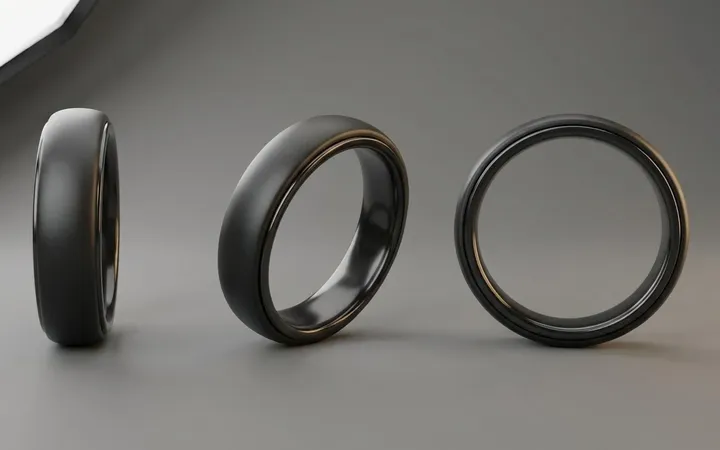
What we did
- The table app: the screen with each diner's digital twin, the floor panel and the page on the diner's phone
- Readings from the house biosensor ring and from the glucose sensor, when the diner shares it
- GOMNI at the table: it proposes the opening drink and the sequence of courses, and explains each dish by voice and on screen
- Per-diner portion weights, which give the kitchen the grams of each component for that person
- The PDF report in the diner's language and the 15-day journal with the sensor
- The commercials for the experience
Zero Point Table is a private table at Speechless Patagonia, in Punta Arenas, for one person or a group of up to eight. It is the first application of OMNI-GÉNESIS 37, our research program in precision nutrition, and our most demanding test of our own technology in food service: each diner’s state on arrival decides what goes on their plate and how many grams of each component. It is in its pilot stage.
What it measures
| Signal | Measured with | When |
|---|---|---|
| Heart rate and heart rate variability (HRV) | The house biosensor ring | On arrival and at 45 minutes |
| Pulse, HRV and sleep | The diner’s own watch or ring, if they bring it and share it | On arrival |
| Interstitial glucose, as a continuous curve | FreeStyle Libre 2 sensor, optional and for adults only; it stays on for up to 15 days | During the meal and afterwards |
| What the diner reports: what they avoid, what their watch or glucose meter shows, and their energy | Their phone or the host | On arrival and at 45 minutes |
What it calculates
- The digital twin: each diner’s figure on the table screen, with what they brought today.
- The day’s flexibility: high, medium or low, based on their HRV.
- The proposal: GOMNI proposes an opening drink for each diner and the sequence of courses. It chooses from a closed list: the day’s menu, minus what the diner avoids and minus what the kitchen doesn’t have that day. The house confirms before serving. If the diner avoids something, the kitchen checks each of their dishes.
- Per-diner portion weights: each dish is broken down into protein, carbohydrate, vegetables and fiber, fat and acid. The kitchen receives the grams of each group for that person, calculated from their flexibility of the day, their hours of sleep and the time of the meal, along with the order in which they are served. The calculation stays fixed at the time it was made.
- The second reading: 45 minutes after the first dish is served, the table measures again.
What the diner takes home
- Their report on their phone, in their language: how they arrived, what they avoid, what GOMNI proposed and the house confirmed, their second reading, their curve if they shared the sensor, and where each piece of data comes from. It shows the before and after, without rating them.
- With the sensor, the 15-day journey: a journal on their phone where they photograph what they eat; GOMNI names the food and the table matches it to their glucose curve. They receive reports on day 1, day 7 and day 15.
How the data is looked after
- The system runs in the cloud, in a data center in Santiago, Chile.
- The sensor is only shared after the diner accepts it on their phone. They can stop sharing it whenever they want.
- The restaurant does not write down readings. Reports, visits and closed journeys are deleted automatically after 30 days.
The table’s technology is our own and is developed at the OMNI-GÉNESIS 37 Lab.
It is a dining experience, not a health service: the table describes what it measures and does not interpret it. The ring and the sensor are voluntary.